Why most AI pilots never reach production
Almost every company is running AI pilots. Very few have put one into production. The gap is not the model — it is everything around it.
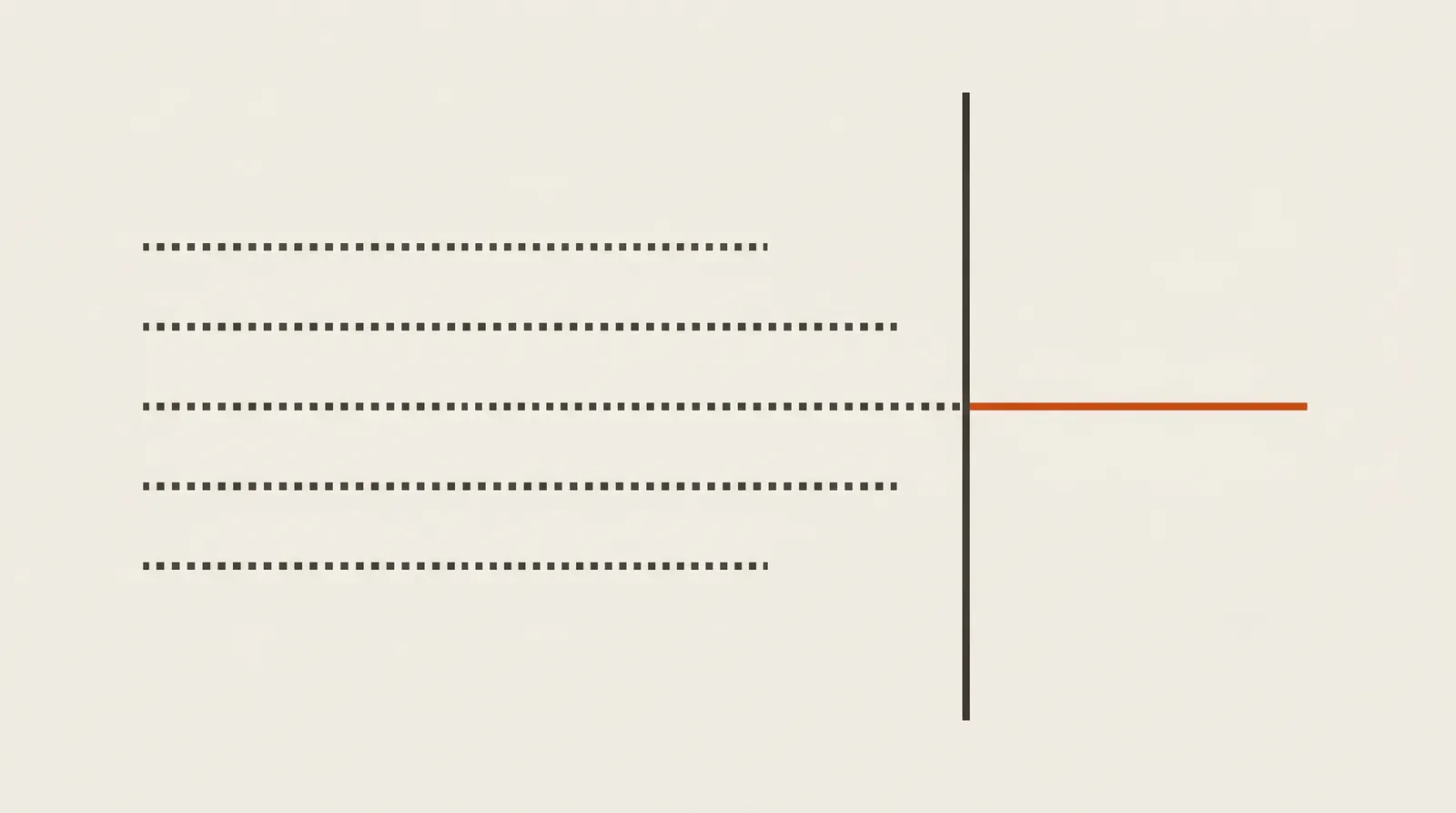
Most enterprise AI pilots never reach production — research puts the failure rate somewhere between 80% and 95%. The cause is rarely the model. It is everything around it: vague goals, ungoverned data, no way to measure quality, and pilots built to impress in a demo rather than to operate in the real world. The gap between a convincing demo and a system you can trust is where projects quietly die.
The numbers
The scale of the problem is well documented across independent studies:
- MIT's 2025 research found roughly 95% of enterprise generative-AI pilots produced no measurable P&L impact.
- S&P Global reported that 42% of companies abandoned most of their AI initiatives in 2025, up sharply year over year.
- RAND's analysis put the overall AI project failure rate above 80% — about twice the rate of non-AI technology projects.
- The average organization scraps close to half of its proofs-of-concept before they ever reach production.
These are not stories about models that did not work. The models mostly worked. The systems around them did not get built.
Why AI pilots fail
Across those studies the same root causes recur:
- No clear business problem. Many pilots start from "we should use AI" rather than a specific, measurable outcome. Initiatives spread thin across novelty use cases, and none of them moves a number anyone cares about.
- Data that is not ready. Sophisticated models get bolted onto fragmented, unstructured, ungoverned data. Survey after survey names data quality and readiness as the top obstacle to AI success — the model is only as good as what it can reach.
- Built to impress, not to operate. A pilot optimized for a demo skips the unglamorous parts — fallbacks, latency and cost budgets, monitoring — that production actually requires.
- No evaluation. Teams cannot prove the system works or catch it when it regresses, because they never built a way to measure quality. "It seemed good in testing" is not a foundation to scale on.
A demo and a system are different things
A demo runs once, on inputs you chose, for an audience that wants it to work. A production system runs thousands of times a day on inputs nobody anticipated, for users who notice the moment it is wrong. The demo earns applause in a room; the system earns trust over months. Treating the first as evidence for the second is the single most common mistake we see.
The uncomfortable part is that the demo is the easy 20%. The model already works well enough to impress. What remains — the unglamorous 80% — is the engineering that turns a clever output into a dependable one.
Production has requirements a demo never sees
The jump exposes everything a controlled demo hid:
- Adversarial and broken inputs. Real users paste malformed data, ask out-of-scope questions, and try to break things. The system needs sane behaviour on inputs you never imagined.
- Latency and cost budgets. “It answers in twelve seconds for forty cents” is fine in a demo and unshippable in a product. Routing, caching, and right-sizing models are load-bearing, not optimisations.
- Failure modes and fallbacks. What happens when retrieval misses, the API times out, or the model returns confident nonsense? A production system has an answer; a demo just gets lucky.
- Drift. The model changes underneath you. A prompt tuned against one model version can quietly degrade when the provider ships an update.
None of these are research problems. They are engineering problems — which is exactly why so many pilots, built to prove a concept rather than survive contact with reality, never make the crossing.
“It works” is the most dangerous phrase in the room
When a team says an AI feature “works,” ask: measured how? Most pilots have no answer. They have vibes — a handful of impressive examples and a good feeling. Vibes do not survive a model upgrade, a new edge case, or a skeptical stakeholder.
The teams that cross into production replace “it feels better” with “quality is up twelve percent on the cases that matter.” That requires an evaluation suite: a set of representative cases with known-good outcomes, scored automatically, run on every change. Evals turn a subjective demo into an engineering artifact you can defend, regress-test, and improve.
What the teams that cross the gap do
The organizations that get to production are not the ones with the most impressive demos. They share a different set of habits:
- Define the metric first. They pin the number the system has to move, and what "done" means, before any code. A pilot without a target metric is a science project.
- Build evals from week one. They measure quality from the start — representative cases with known-good answers, scored automatically — so every change is judged against evidence, not impressions.
- Engineer the unglamorous 80%. Fallbacks, latency and cost budgets, and observability are part of the build, not a later phase.
- Use real data and govern it. They feed the pilot the messy, representative data production will actually see — with the access controls and lineage that go with it — instead of a clean sample.
- Roll out in a controlled way. Shadow deployments and canary releases let them compare the system against reality and limit the blast radius before it carries real traffic.
- Stay to run it. Someone owns the system after launch — watching the metric, catching drift, and sharpening it as data and models change.
A pilot-to-production checklist
Before a pilot is allowed to call itself ready, it should clear all of these:
- A specific business metric the system must move, agreed up front.
- Data access and governance — the real data, with the right controls.
- An eval harness scoring quality on every change.
- Fallbacks and monitoring for when retrieval misses, an API times out, or the model drifts.
- A controlled rollout plan (shadow or canary), not a big-bang launch.
- A named owner for running it after go-live.
The takeaway
The dividing line in enterprise AI is not who is using AI — almost everyone is — but who has integrated it into a system they can operate and trust. That is an engineering and organizational problem far more than a model problem, which is the good news: it is solvable on purpose. Treat production as the goal from day one, measure quality, engineer for failure, and the 95% statistic stops being about you.

Written by
ByteTuned Editorial Team
Senior engineers writing about building and running production AI.
Keep reading
AI agents vs chatbots: what’s actually different
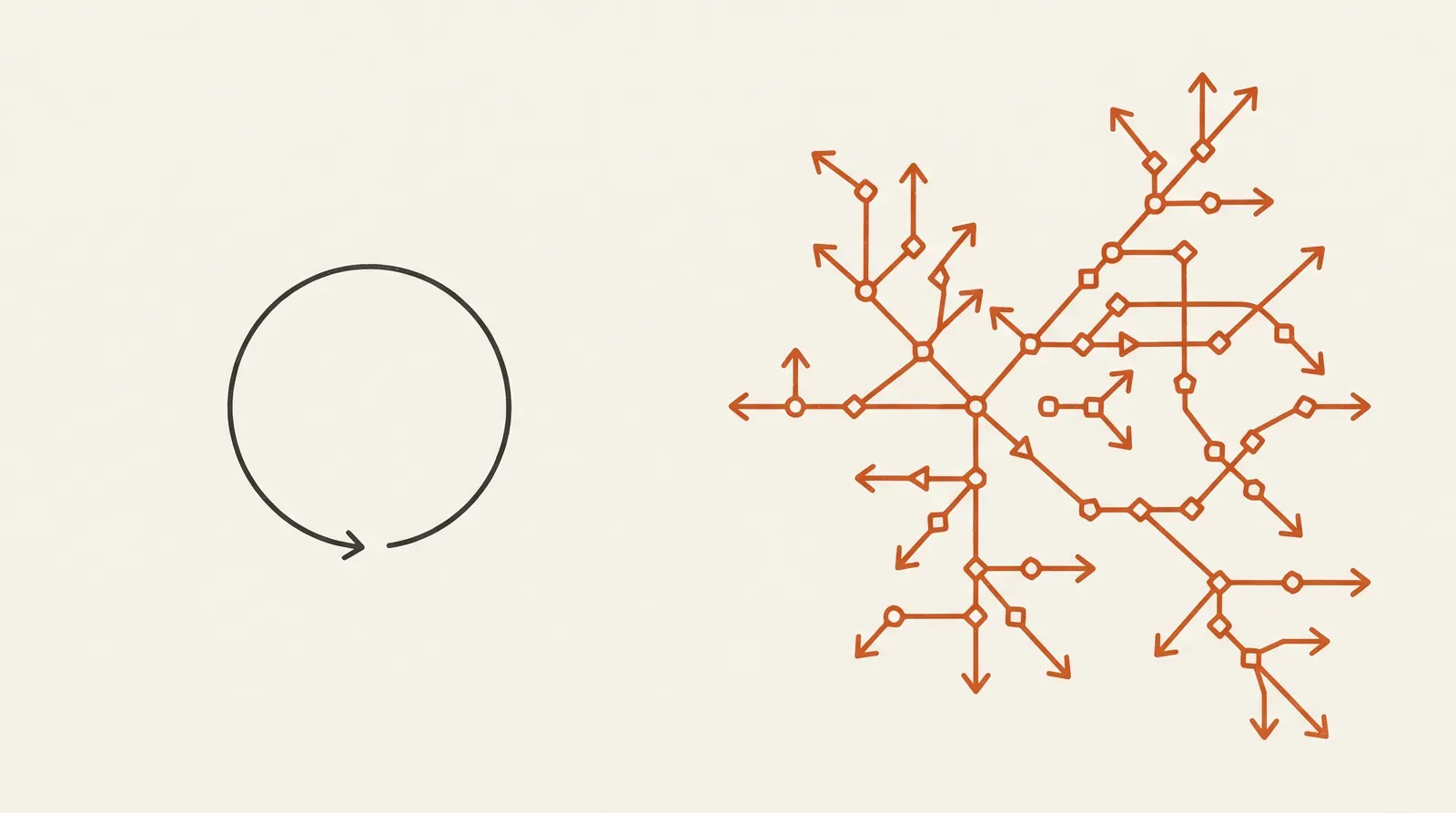
A chatbot responds to a prompt and stops. An AI agent plans a goal, uses tools to carry it out, checks the result, and keeps going until the task is done. The dividing line is autonomy.
What is RAG (retrieval-augmented generation), and how does it work?
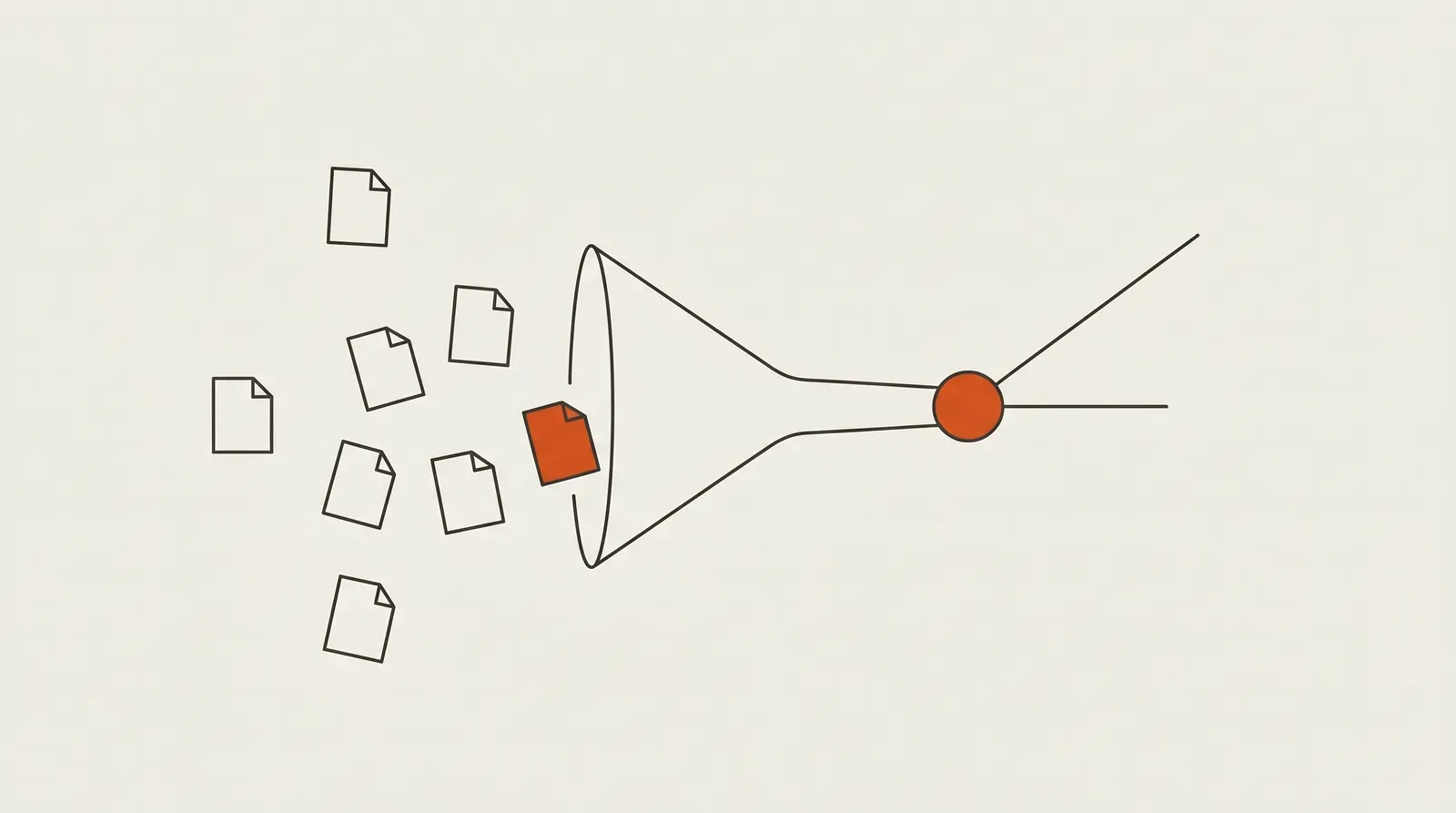
RAG makes an LLM answer from your data instead of only its training. Before the model writes, a retrieval step finds the most relevant passages and adds them to the prompt — so the answer is grounded in real, current facts.

RAG vs fine-tuning: which one does your problem need?
Use RAG when the problem is missing knowledge — facts that change or that the model never saw. Use fine-tuning when the problem is behavior — a tone, format, or decision pattern. They solve different problems, and the best systems use both.
Building production AI? Let’s talk.
Book a 30-minute call. We’ll map the highest-impact system to build first — and what moving that number is worth.