RAG vs fine-tuning: which one does your problem need?
Use RAG when the problem is missing knowledge — facts that change or that the model never saw. Use fine-tuning when the problem is behavior — a tone, format, or decision pattern. They solve different problems, and the best systems use both.
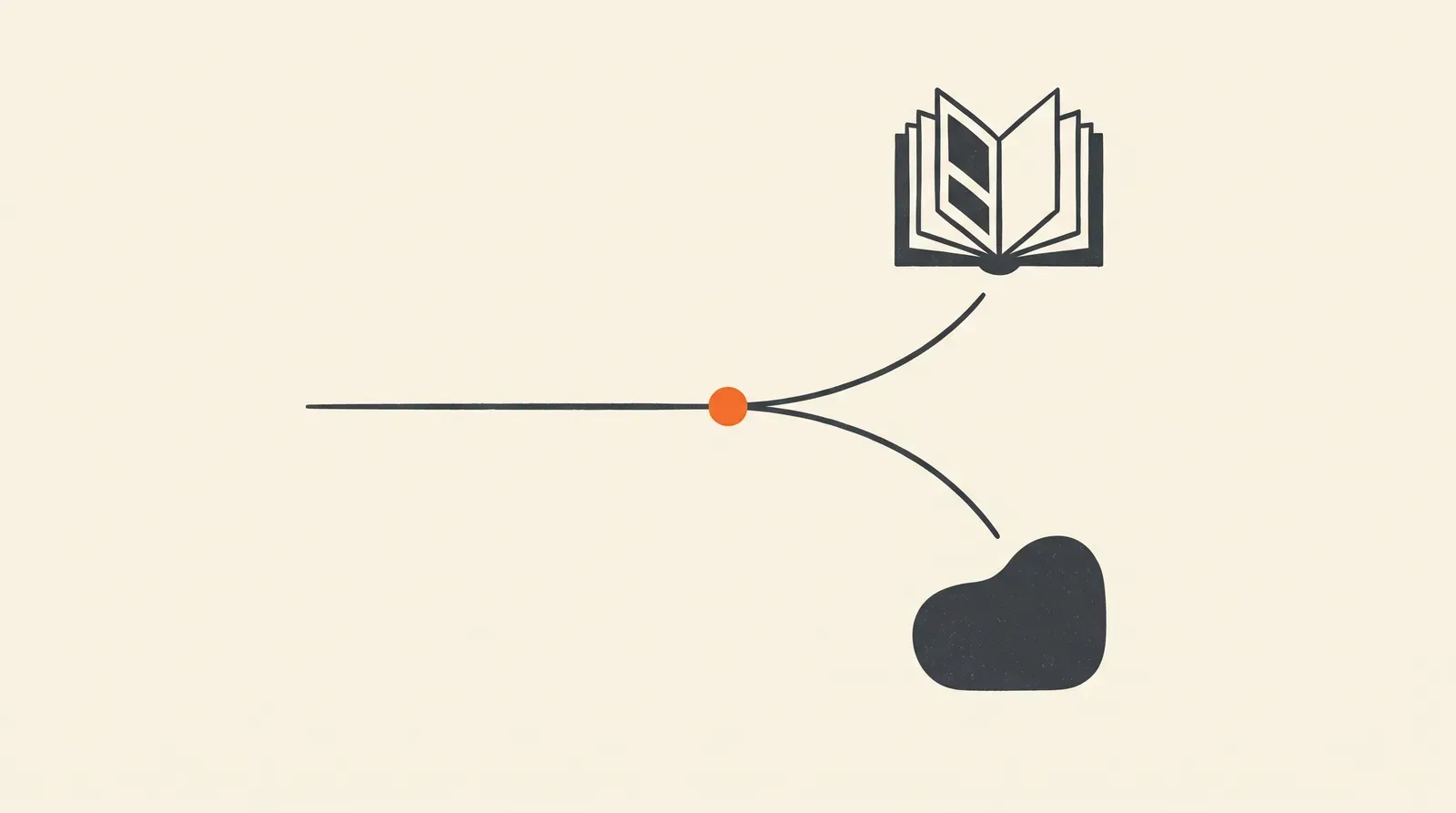
When teams want to customize an LLM for their use case, they reach for one of two tools: RAG or fine-tuning. The choice is simpler than it is usually made to sound. Use RAG when the problem is missing knowledge — facts the model does not have, or that change too often to bake in. Use fine-tuning when the problem is behavior — a tone, format, or decision pattern the model will not follow reliably. They are not competitors; they fix different problems, and the strongest production systems use both.
The expensive mistakes happen when teams pick the wrong one — fine-tuning a model to "teach it" knowledge that should have lived in a retrieval index, then struggling to keep that knowledge current. Here is how to tell which problem you actually have.
The one-line rule
RAG gives a model knowledge. Fine-tuning changes a model's behavior. Almost every correct decision follows from that sentence. If what is missing is facts, you want retrieval. If what is wrong is how the model responds, you want fine-tuning. Hold that distinction and the rest is detail.
What RAG is good at
RAG (retrieval-augmented generation) fetches relevant documents at query time and feeds them to the model as context — so the model answers from data it never had to memorize. It shines when:
- Your knowledge changes often — catalogs, documentation, policies, prices. Update the index, and the next answer is current.
- You need source attribution — RAG answers can cite the exact passage they came from, which matters for trust, compliance, and debugging.
- You are pulling from many or large sources — far cheaper than trying to compress all of it into a model's weights.
If you have not met RAG yet, start with what RAG is and how it works.
What fine-tuning is good at
Fine-tuning continues training a base model on your examples, adjusting its weights so it internalizes a pattern of behavior. It shines when:
- You need a consistent format or structure the base model keeps drifting from.
- You need a specific tone or style — a brand voice, a clinical register, a terse support reply.
- You are doing classification or routing where you have many labeled examples and want fast, reliable categorization.
- The bottleneck is behavior, not facts — the model knows enough, it just will not respond the way you need.
Side by side
| RAG | Fine-tuning | |
|---|---|---|
| Best for | Knowledge & facts | Behavior, tone, format |
| Data freshness | Live — as current as the index | Frozen at the last training run |
| Cost to update | Incremental and cheap | A new training run each time |
| Source attribution | Yes — can cite passages | No — no traceable source |
| Setup effort | Build an ingestion + retrieval pipeline | Curate training data, run training |
| Main maintenance | Index updates, retrieval tuning | Periodic retraining, data management |
The cost line is the one that surprises people. Updating a RAG system is just re-indexing changed documents. Fine-tuning means assembling fresh training data and paying for another run — and full fine-tunes are expensive enough (industry estimates run well into five and six figures for large models) that teams put them off, which is exactly how a fine-tuned model goes stale. Lightweight methods like LoRA adapters lower that cost, but the structural point stands: RAG updates are cheap and continuous; fine-tuning updates are not.
Two scenarios, two right answers
The rule gets concrete fast when you apply it:
- "Our support bot gives outdated answers about our product." This is a knowledge problem — the bot does not have your current docs. Fine-tuning would be the wrong, expensive move (you would retrain every time a doc changes). The fix is RAG: index your help center, and every answer reflects the latest version automatically.
- "Our bot has the right facts but sounds robotic and ignores our escalation rules." This is a behavior problem — the facts are fine, the way it responds is not. RAG cannot fix tone or decision style. The fix is fine-tuning on examples of the voice and the escalation behavior you want.
Notice that both bots might look similar from the outside, but the right tool is opposite — because the problem is opposite. Diagnosing facts-vs-behavior correctly is the entire decision.
Why "use both" is usually the real answer
The mature production pattern is hybrid: RAG supplies the facts, fine-tuning shapes the behavior. A support assistant might use retrieval to ground every answer in your current help center, and a light fine-tune so it always answers in your brand's voice and escalates the way your policy requires. Facts from retrieval, behavior from fine-tuning — each tool doing the job it is actually good at.
Most "fine-tuning failures" we see are really this mistake in reverse: a team fine-tuned a model to memorize knowledge, the knowledge changed, and now the model is confidently out of date with no cheap way to fix it. That knowledge belonged in RAG.
How to decide
Walk your use case through this:
- Is the gap facts or behavior? Missing or wrong information → RAG. Wrong way of responding → fine-tuning.
- Does the knowledge change? If yes, lean hard toward RAG — you do not want to retrain every time a document updates.
- Do you need citations? If yes, RAG — fine-tuned answers have no traceable source.
- Do you have labeled examples of the behavior you want? Fine-tuning needs them; without a good dataset it will not work.
- Still unsure? Start with RAG. It is cheaper, faster to stand up, and easier to change. Add fine-tuning only once you have proven that behavior — not missing knowledge — is the real blocker.
Get this right and you avoid the most common and most expensive misstep in applied AI: spending a fine-tuning budget to solve a retrieval problem.
The bottom line
RAG and fine-tuning are not a versus at all once you see what each one does. RAG changes what a model knows by handing it the right documents at answer time — ideal for facts that change and need citing. Fine-tuning changes how a model behaves by adjusting its weights on your examples — ideal for tone, format, and decision patterns. Most production systems need a bit of both, but the order is almost always the same: reach for RAG first because it is cheaper and faster to iterate, and add fine-tuning only when behavior, not knowledge, is provably the thing holding you back.

Written by
ByteTuned Editorial Team
Senior engineers writing about building and running production AI.
Keep reading
AI agents vs chatbots: what’s actually different
A chatbot responds to a prompt and stops. An AI agent plans a goal, uses tools to carry it out, checks the result, and keeps going until the task is done. The dividing line is autonomy.
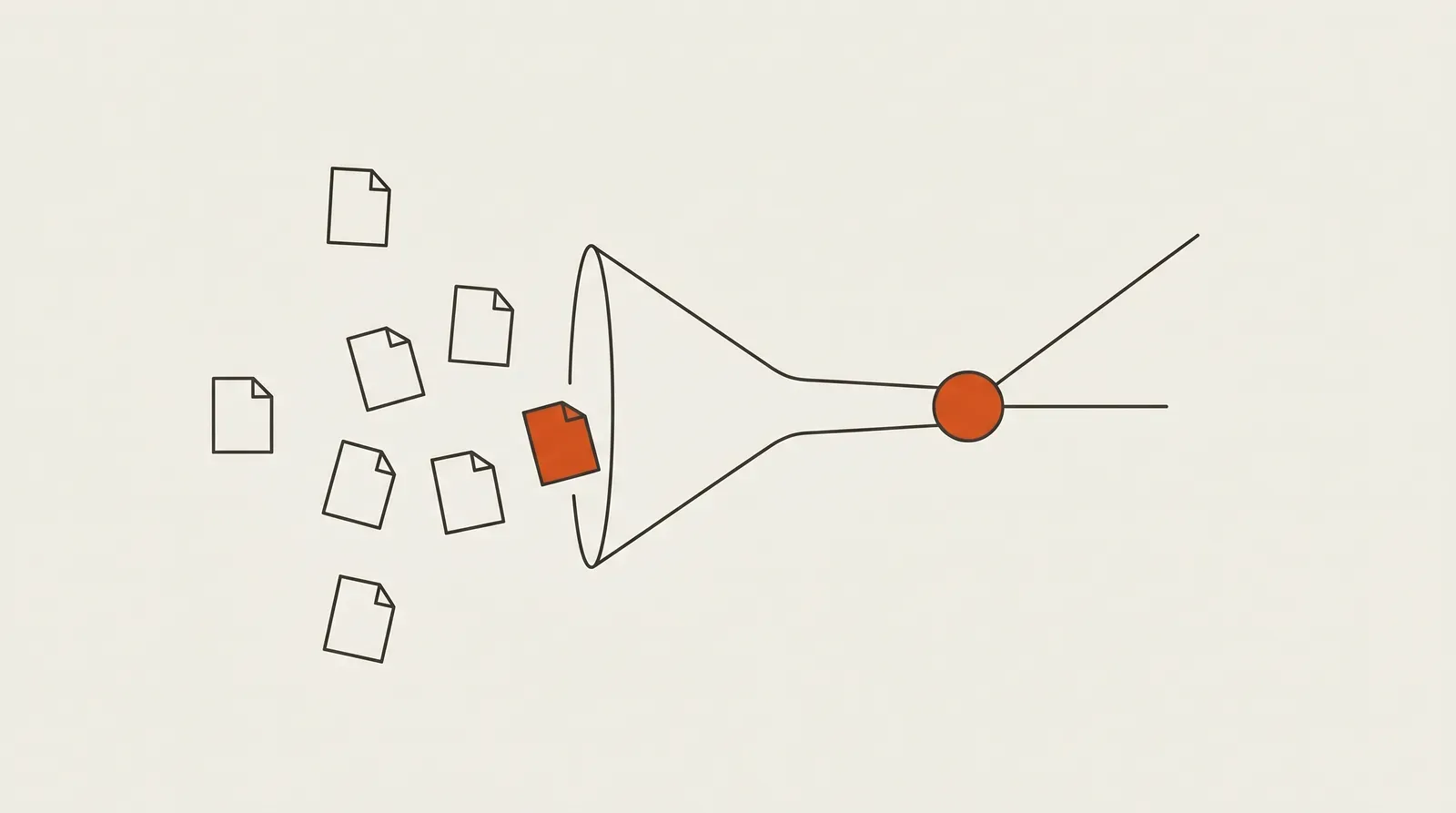
What is RAG (retrieval-augmented generation), and how does it work?
RAG makes an LLM answer from your data instead of only its training. Before the model writes, a retrieval step finds the most relevant passages and adds them to the prompt — so the answer is grounded in real, current facts.
Why most AI pilots never reach production
Almost every company is running AI pilots. Very few have put one into production. The gap is not the model — it is everything around it.
Building production AI? Let’s talk.
Book a 30-minute call. We’ll map the highest-impact system to build first — and what moving that number is worth.